Know your load
Copper scrap prices
The right grade matters as much as the weight. Sort your copper, ask for a local quote, and check what your yard will actually accept before you haul.
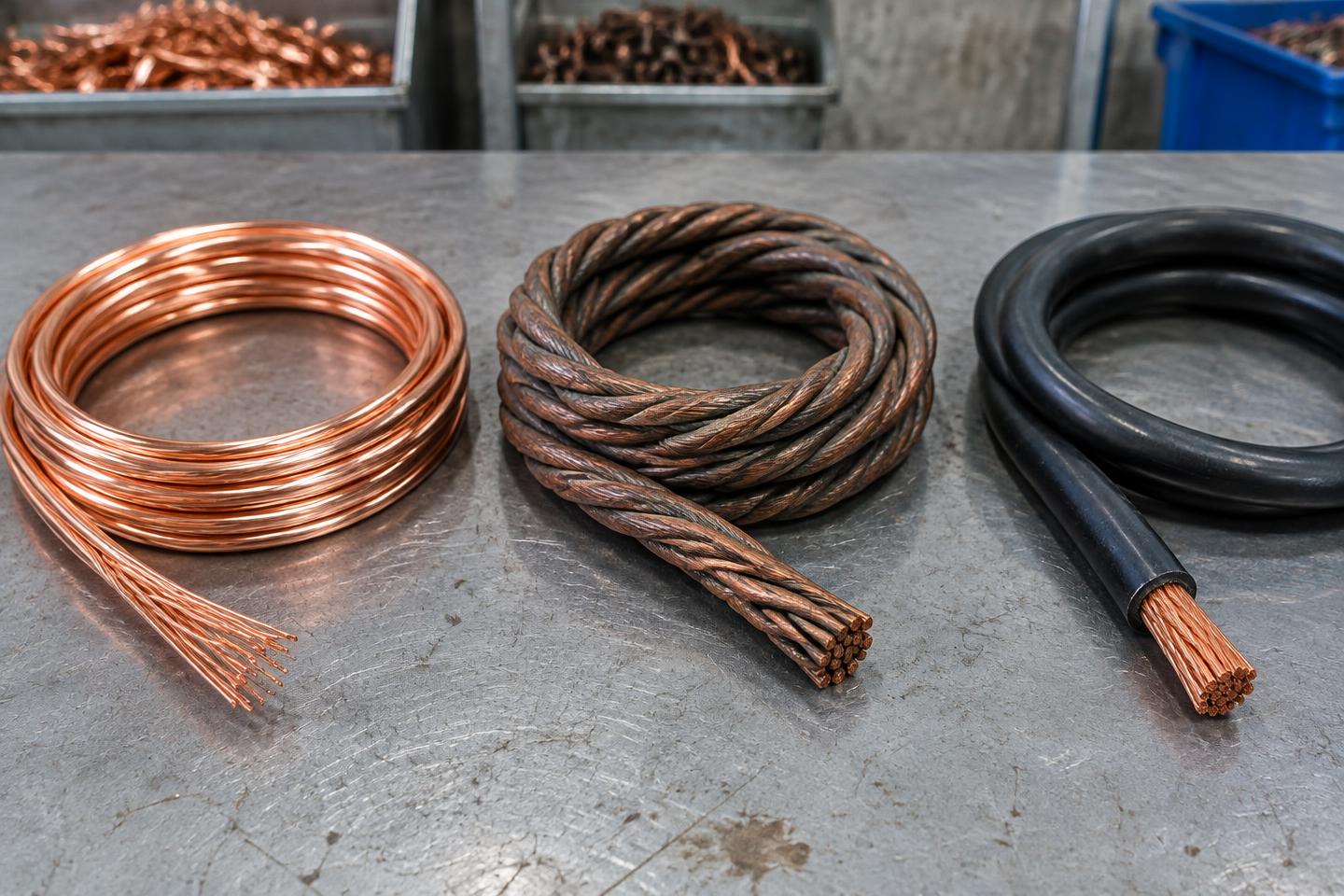
Which copper grade do you have?
- #1 Bright & Shiny Copper
- Bright, clean, bare copper wire with no jacket, paint, solder or other contamination. Yards may call it “bare bright” and apply their own wire-size requirements. Clean #1 copper tubing can be a separate grade—ask before combining it with wire.
- #2 Copper
- Darkened, brown, gray or black copper strands without a plastic or rubber jacket are bare copper, not insulated wire. Scrapper’s Delight estimates dark bare stranded wire as #2; bright, clean wire may qualify for #1. Oxidation alone does not guarantee a yard’s grade: solder, coatings, contamination and buyer specifications also matter.
- Insulated Copper Wire (by recovery %)
- A continuous plastic or rubber jacket must be visible. Yards buy this material according to recoverable copper content and their sampling method; thick jackets and mixed cables can change the offer. If the photo is unclear, check: “Is there a plastic/rubber coating on this wire?”
Get a local price—not a promised payout
Copper market conditions, location, grade, recoverable content, processing costs and load size can affect a yard’s offer. A market benchmark is not the price a local yard must pay. This guide does not publish a live price feed.
- Call two nearby yards with the same grade description and approximate weight.
- Ask for the price per pound or kilogram, the currency (USD or CAD), and whether deductions apply.
- Confirm the quote date, accepted wire grades, opening hours, ID and proof-of-ownership requirements.
- Keep bright bare wire, dark bare copper and insulated wire separated for grading.
For posted boards in the app, use dated material from the last 3 days; an old price sheet is not today’s quote.
Find nearby yardsEstimating a truck bed or bin of copper
A large load needs a low–high weight estimate, not a confident single number. Container volume, fill depth, air gaps and wire gauge matter more than the number of visible coils. Loosely piled heavy-gauge stranded copper can be much heavier than it looks.
When scanning, add your truck-bed length (short, standard or long), approximate fill depth, and whether the load is loose or tightly packed. For a trailer or bin, add its dimensions. A photo cannot replace a scale.
After selling, log your scale ticket. Net material weight and the yard’s actual grade and rate determine the final payout.
Check your copper before you haul
Scan the wire or load for an AI estimate of its material, grade, weight and value. All dollar values are estimates—not offers or guarantees. Your recycler’s weighing, grading and deductions decide what you receive.
Scan your copper